


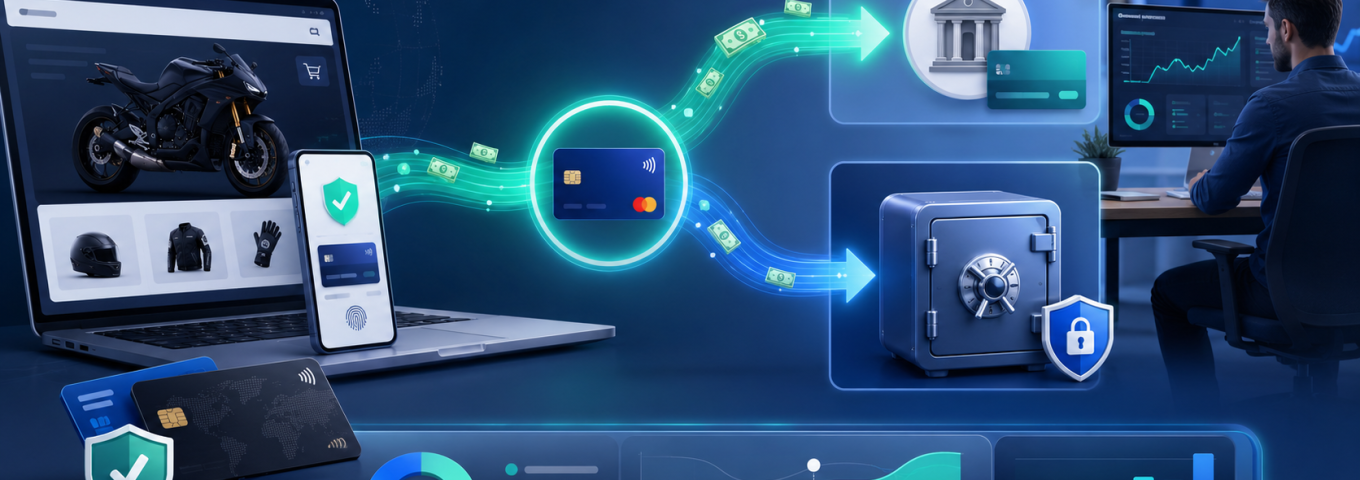
ACH vs Credit Card Payments: What Merchants Should Compare Before Choosing

Introduction
Merchants often think of payment processing as card processing, but credit cards are not the only option. ACH and eCheck payments can also help businesses accept payments electronically, especially for invoices, recurring billing, high-ticket transactions, B2B payments, healthcare balances, professional services, memberships, and some high-risk merchant categories.
Credit card payments are familiar, fast, and convenient for customers. ACH payments move money through bank accounts instead of card networks. Each option has different costs, funding timelines, dispute rules, customer expectations, and risk considerations.
For many businesses, the best setup is not ACH or credit card payments alone. It is a payment mix that fits the business model, average ticket size, customer behavior, billing method, and cash-flow needs.
This guide explains the difference between ACH and credit card payments, when each option works best, and what merchants should compare before choosing.
Quick Answer: What Is the Difference Between ACH and Credit Card Payments?
ACH payments move money directly between bank accounts through the Automated Clearing House network, while credit card payments are processed through card networks and charged to the customer’s card account. ACH can be useful for recurring billing, B2B invoices, high-ticket payments, and bank-based payments. Credit cards are often better for fast checkout, ecommerce, retail, restaurants, and customers who prefer card rewards or immediate authorization. Merchants should compare cost, funding speed, customer convenience, dispute risk, chargeback rules, transaction size, and business type before choosing.
What Are ACH Payments?
ACH payments are electronic bank-to-bank transfers. Instead of using a credit card, the customer authorizes the merchant to pull funds from a bank account.
ACH payments are commonly used for:
Recurring billing
Invoice payments
B2B payments
Healthcare balances
Professional services
Membership dues
Rent or service payments
Tuition or program payments
Payment plans
High-ticket transactions
Subscription payments
Donations
eCheck payments
ACH is often used when the customer is comfortable paying from a bank account and the merchant wants another option beyond card payments.
What Are Credit Card Payments?
Credit card payments allow customers to pay using a card issued by a bank or card issuer. The payment is authorized through the card network and processed through the merchant’s payment processor.
Credit card payments are commonly used for:
Ecommerce checkout
Retail purchases
Restaurant payments
Online service payments
Subscriptions
Travel bookings
Healthcare payments
Digital products
Phone orders
Payment links
Invoices
High-risk merchant payments
Cards are popular because customers are familiar with them and often expect card acceptance.
ACH vs Credit Card Payments: Main Comparison
| Area | ACH Payments | Credit Card Payments |
|---|---|---|
| Payment source | Customer bank account | Customer card account |
| Customer familiarity | Common for bills, invoices, subscriptions | Very familiar for everyday purchases |
| Funding speed | Can take longer | Often faster, depending on processor |
| Cost structure | Often lower for larger payments | May cost more for high-ticket transactions |
| Best use cases | B2B, recurring, invoices, high-ticket | Ecommerce, retail, restaurants, fast checkout |
| Dispute type | ACH returns and disputes | Card chargebacks |
| Authorization | Bank account authorization required | Card authorization required |
| Customer convenience | Good for planned payments | Strong for quick purchases |
| Risk | Returns, insufficient funds, unauthorized claims | Chargebacks, fraud, issuer declines |
| Processing setup | Requires ACH/eCheck support | Requires card processing support |
The right choice depends on the payment situation.
Cost Considerations
ACH payments may be cost-effective for some merchants, especially when transaction amounts are higher. Credit card payments often include a percentage-based fee plus a transaction fee, which can become expensive on larger transactions.
However, cost is not the only factor. Merchants should compare:
Transaction fees
Monthly fees
Return fees
Chargeback or dispute fees
Gateway fees
Batch fees
ACH verification fees
Refund handling
Reserve requirements
Funding speed
Customer preference
Risk exposure
A lower fee does not help if customers do not want to use the payment method.
Funding Speed
Credit card payments may fund faster depending on the processor, account type, batch time, risk level, and funding terms. Some merchants may qualify for next-day funding.
ACH payments can take longer because bank transfers may need time to clear. ACH returns may also happen after the payment appears to be in process.
Merchants should ask:
When will card payments deposit?
When will ACH payments deposit?
Are funds available before ACH risk clears?
What happens if an ACH payment returns?
Is next-day funding available for cards?
Is faster ACH funding available?
Do reserves affect funding?
Does business type affect timing?
Funding speed matters for payroll, inventory, fulfilment, service delivery, and cash flow.
Customer Convenience
Credit cards are usually more convenient for fast checkout because customers already know how to enter card details. Cards are especially strong for ecommerce, retail, restaurants, digital services, travel bookings, and mobile purchases.
ACH may require customers to enter bank account information or connect through a verification flow. Some customers may be comfortable with this for bills, invoices, memberships, or recurring services, but less comfortable for quick purchases.
Ask:
Do customers expect to pay by card?
Are customers used to invoice payments?
Is this a one-time or recurring payment?
Is the transaction amount high?
Is this B2B or consumer?
Do customers need payment flexibility?
Customer behavior should guide payment options.
Best Use Cases for ACH Payments
ACH payments may work well for:
B2B invoices
Recurring service payments
Professional retainers
Healthcare memberships
High-ticket invoices
Payment plans
Subscription payments
Monthly dues
Bank-based payments
Tuition payments
Wholesale orders
Service deposits
Recurring donations
ACH-enabled payment links
eCheck payments
ACH is often useful when the payment is planned, larger, or relationship-based.
Best Use Cases for Credit Card Payments
Credit card payments may work well for:
Ecommerce checkout
Retail transactions
Restaurant payments
Online purchases
Digital products
Fast checkout
One-time purchases
Travel bookings
Appointment payments
Phone orders
Payment links
Mobile payments
Customer self-service payments
Subscription signups
Cards are often better when customers want speed and convenience.
ACH for High-Ticket Transactions
High-ticket merchants may consider ACH because percentage-based card fees can become expensive as ticket sizes increase. ACH may also be useful for invoices, professional services, deposits, and recurring payments.
High-ticket ACH use cases include:
B2B invoices
Legal or consulting retainers
Healthcare balances
Coaching programs
Equipment payments
Wholesale purchases
Contract milestones
Service deposits
Payment plans
Merchants should still verify customer authorization and understand return risk.
Credit Cards for Quick Checkout
Credit cards are strong for fast checkout. Customers can complete payment quickly, especially on ecommerce stores and mobile checkout pages.
Credit card advantages include:
Fast authorization
Customer familiarity
Useful for impulse purchases
Works well for ecommerce
Supports subscriptions
Can support digital wallets
Good for retail and restaurants
Easy for payment links
Easy for online checkout
For many customer-facing businesses, card acceptance is expected.
Disputes: ACH Returns vs Card Chargebacks
ACH and card payments have different dispute and return systems.
Card payments can result in chargebacks when customers dispute through their card issuer.
ACH payments can result in returns or disputes for reasons such as insufficient funds, incorrect account information, unauthorized payment claims, closed accounts, or stopped payments.
Merchants should monitor both.
| Area | ACH | Credit Card |
| Common issue | Return or unauthorized debit claim | Chargeback |
| Customer action | Bank account dispute or return | Card issuer dispute |
| Common causes | Insufficient funds, wrong account, unauthorized debit | Fraud, product not received, unrecognized charge |
| Merchant need | Authorization records and verification | Receipts, proof, fulfilment records |
| Risk control | Bank verification, clear authorization | AVS, CVV, fraud filters |
Both methods require clear records.
Authorization Requirements
ACH payments require clear customer authorization because funds are pulled from a bank account. Merchants should keep proof that the customer agreed to the payment.
ACH authorization may include:
Signed authorization form
Online authorization checkbox
Recorded authorization where allowed
Customer agreement
Invoice approval
Recurring billing authorization
Payment plan agreement
Credit card payments also need authorization, especially for recurring billing, phone orders, virtual terminal payments, and high-ticket transactions.
Clear authorization protects the merchant.
Security Considerations
Both ACH and credit card payments require secure handling.
For ACH:
Avoid storing bank details insecurely
Use secure payment forms
Use bank verification where appropriate
Restrict staff access
Document authorization
Monitor returns
Protect customer account information
For credit cards:
Use secure gateways
Avoid storing raw card details
Use tokenization where available
Enable AVS and CVV
Use fraud filters
Send receipts
Monitor chargebacks
Security should be built into the payment process, not added later.
Fraud Risk
Credit card fraud may involve stolen card numbers, card testing, unauthorized purchases, or chargebacks. ACH risk may involve unauthorized bank debits, incorrect bank details, closed accounts, or insufficient funds.
Fraud controls may include:
AVS checks
CVV verification
3D Secure where appropriate
Bank account verification
Velocity rules
Manual review
Transaction limits
Customer identity checks
Clear authorization
High-ticket review
Suspicious activity monitoring
The best controls depend on the payment method and business model.
Failed Payment Risk
Both ACH and card payments can fail.
Credit card payments may fail because of:
Expired cards
Issuer declines
Insufficient credit
CVV mismatch
Billing address mismatch
Fraud filter declines
Unsupported cards
Gateway timeouts
ACH payments may fail because of:
Insufficient funds
Incorrect account number
Closed account
Unauthorized debit claim
Payment stopped
Account unable to accept debit
Bank verification failure
Merchants should track failed payment reasons for both methods.
Refund Handling
Refunds may work differently depending on payment method, provider, and timing.
Ask:
How are card refunds processed?
How are ACH refunds processed?
How long do refunds take?
Are original fees returned?
Are refund fees charged?
Can ACH refunds be reversed?
How are partial refunds handled?
How are subscription refunds handled?
Refund clarity helps reduce disputes.
Recurring Billing
Both ACH and credit cards can be used for recurring billing if supported by the payment provider.
Cards may be better for:
Consumer subscriptions
Memberships
Ecommerce subscriptions
Digital services
Online coaching
Adult memberships
Nutraceutical subscriptions
ACH may be better for:
B2B retainers
Healthcare memberships
Professional services
High-ticket recurring plans
Installment payments
Recurring invoices
The best method depends on customer expectations and ticket size.
Invoices and Payment Links
Both ACH and credit card payments can be offered through invoices and payment links if the gateway supports them.
This allows customers to choose:
Pay by card
Pay by bank account
Pay by eCheck
Pay later through invoice
Pay securely through a link
Offering both methods can improve payment completion for remote businesses.
Business Type Considerations
Different businesses need different payment setups.
| Business Type | Strong Option |
| Ecommerce store | Credit cards, digital wallets, possibly ACH for high-ticket |
| B2B service provider | ACH, eCheck, invoices, cards |
| Healthcare practice | Cards, ACH/eCheck, invoice payments |
| Restaurant | Credit/debit cards |
| Subscription business | Cards and possibly ACH depending on customer type |
| High-ticket merchant | ACH/eCheck and cards |
| Retail store | Credit/debit cards |
| Travel business | Cards, ACH/eCheck for larger balances |
| Professional services | ACH/eCheck, invoices, cards |
| High-risk merchant | Depends on processor approval and category |
A merchant should choose payment methods based on customer behavior and risk profile.
High-Risk Merchant Considerations
High-risk merchants should confirm that both ACH and credit card processing are supported for their category. Some high-risk businesses may need specialized approval for ACH, eCheck, cards, recurring billing, virtual terminal use, or payment gateways.
High-risk categories may include:
CBD
Adult businesses
Travel
Nutraceuticals
Vape
Forex
Subscription billing
High-ticket coaching
Digital products
Credit repair
Bad credit merchants
High-volume merchants
High-risk merchants should ask about reserves, funding timelines, return limits, chargeback monitoring, ticket limits, and monthly volume limits.
ACH vs Credit Card Decision Checklist
| Question | ACH May Fit Better | Credit Card May Fit Better |
| Is the payment high-ticket? | Yes | Sometimes |
| Is it a fast ecommerce checkout? | Sometimes | Yes |
| Is it B2B? | Yes | Sometimes |
| Is it retail or restaurant? | Rarely | Yes |
| Is it recurring billing? | Yes, for some models | Yes, for many consumer models |
| Does the customer expect invoice billing? | Yes | Sometimes |
| Is speed most important? | Sometimes | Often |
| Is lower processing cost important? | Often | Sometimes |
| Is customer convenience most important? | Sometimes | Often |
| Is the business high-risk? | Depends on approval | Depends on approval |
Many merchants benefit from offering both.
Questions to Ask Before Choosing
Before choosing ACH, credit cards, or both, ask:
What payment methods do customers prefer?
What is the average ticket size?
What is the highest ticket size?
How quickly do we need funding?
Do we send invoices?
Do we use recurring billing?
Do we need payment links?
Do we need virtual terminal access?
Are we high-risk?
Are ACH/eCheck options approved?
Are card payments approved for our category?
What are the return or chargeback risks?
What fees apply?
What documentation is required?
Can we offer both methods?
A good payment setup should match real business activity.
Common Mistakes Merchants Make
Avoid these mistakes:
Choosing only by fee
Ignoring customer preference
Using ACH without clear authorization
Using cards without chargeback monitoring
Not comparing funding timelines
Not reviewing return fees
Not offering alternatives for failed payments
Ignoring high-ticket needs
Not confirming high-risk approval
Using one payment method for every transaction
Not training staff on payment method differences
Not tracking ACH returns and card chargebacks separately
Not explaining refund timelines
Not reviewing gateway compatibility
Payment method decisions should be strategic.
How PayingSource Can Help
PayingSource helps merchants compare ACH, eCheck, and credit card payment options based on business type, transaction size, customer expectations, recurring billing needs, invoice workflow, remote payment needs, chargeback exposure, return risk, and high-risk processing requirements.
PayingSource can support merchants with:
ACH and eCheck processing guidance
Credit card processing options
Merchant account support
Payment processing review
High-risk ACH payment processing
High-risk merchant account review
Online payment processing
Payment gateway options
Virtual terminal access
Recurring payment processing
Chargeback management guidance
High-ticket payment review
Funding and reserve guidance
Application preparation
For merchants deciding between ACH and credit card payments, PayingSource can help review options that fit the business model.
FAQs
What is the main difference between ACH and credit card payments?
ACH payments move funds directly between bank accounts, while credit card payments are processed through card networks and charged to the customer’s card account.
Are ACH payments cheaper than credit cards?
ACH payments may be more cost-effective for some merchants, especially for larger payments, but merchants should compare all fees, return risks, funding timelines, and customer preferences.
Are credit cards better for ecommerce?
Credit cards are often better for ecommerce because customers are familiar with card checkout and expect fast payment authorization.
Can ACH payments be used for recurring billing?
Yes. ACH payments can be used for recurring billing if the merchant’s payment provider supports ACH/eCheck and the customer gives proper authorization.
Do ACH payments have chargebacks?
ACH payments do not work exactly like card chargebacks, but they can have returns and disputes, including unauthorized debit claims and insufficient funds returns.
Should merchants offer both ACH and credit cards?
Many merchants benefit from offering both, especially if they handle invoices, recurring billing, high-ticket payments, B2B payments, or customer payment preferences.
How can PayingSource help compare ACH and credit card payments?
PayingSource can help merchants review ACH/eCheck processing, credit card processing, merchant account options, payment gateways, recurring billing, virtual terminals, high-risk processing, and chargeback management needs.
Conclusion
ACH and credit card payments both have value for merchants, but they serve different needs. Credit cards are strong for fast checkout, ecommerce, retail, restaurants, and customer convenience. ACH and eCheck payments can be useful for invoices, recurring billing, B2B payments, high-ticket transactions, healthcare balances, and bank-based payments.
The best choice depends on business type, customer expectations, average ticket size, funding needs, dispute risk, and processing approval. Many merchants should consider offering both methods so customers have more flexibility and the business has more control.
Need help comparing ACH and credit card payment options? Apply with PayingSource today to explore ACH/eCheck processing, credit card processing, merchant account, payment gateway, recurring billing, virtual terminal, and high-risk payment options.