


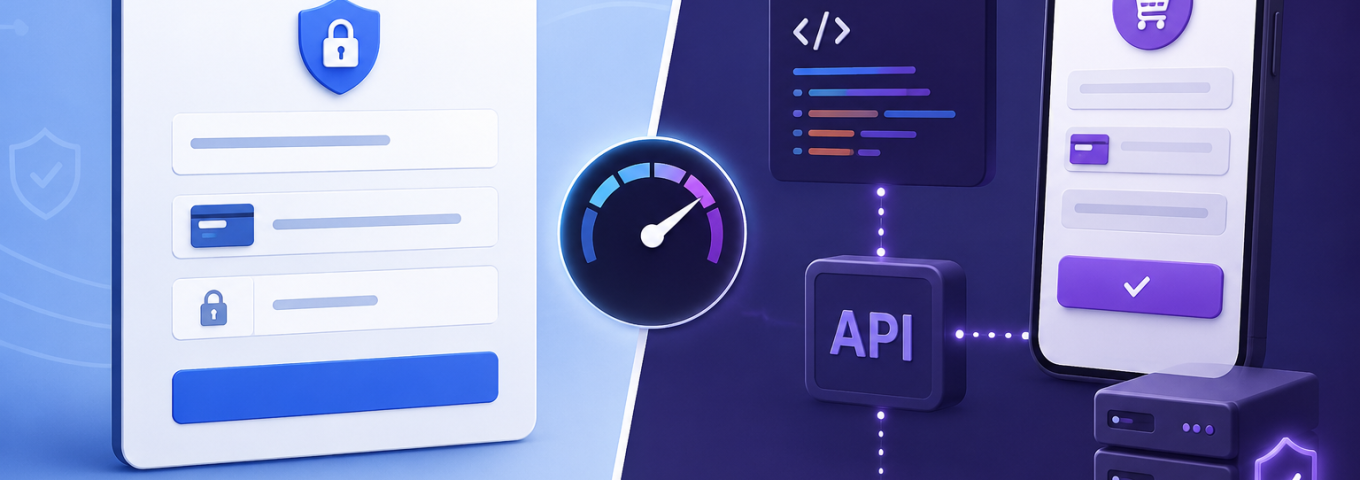
Hosted Payment Page vs API Checkout: Which One Fits Faster?

Introduction
When a business wants to accept payments online, one of the first setup decisions is whether to use a hosted payment page or an API checkout. Both can help customers pay online, but they work differently. A hosted payment page is usually faster to launch because the payment provider hosts the secure checkout page. API checkout gives more control and customization but usually requires more development work.
For small businesses, high-risk merchants, ecommerce stores, service providers, subscription companies, and invoice-based businesses, the right choice depends on speed, security, control, compliance, customer experience, and platform needs. If the goal is to start accepting online payments quickly, a hosted payment page may be the simpler option. If the goal is a fully branded, custom checkout experience, API checkout may be better.
Quick Answer: What Is a Hosted Payment Page?
A hosted payment page is a secure checkout page hosted by a payment provider where customers enter payment details to complete a transaction. The merchant can link to the page from a website, invoice, email, quote, or button without building a full custom checkout. Hosted payment pages are often faster to set up than API checkout and may reduce PCI burden because sensitive card data is handled by the provider’s secure payment environment.
Hosted Payment Page vs API Checkout: Simple Difference
The difference comes down to who hosts and controls the checkout experience.
| Feature | Hosted Payment Page | API Checkout |
|---|---|---|
| Checkout location | Hosted by payment provider | Built into merchant website or app |
| Setup speed | Usually faster | Usually slower |
| Development work | Minimal | More technical work required |
| Customization | Limited to moderate | High |
| PCI scope | Often reduced | Usually more responsibility |
| Best for | Fast launch, invoices, simple online payments | Custom ecommerce, platforms, advanced checkout |
| Maintenance | Provider handles more | Merchant/developer handles more |
| User experience | May redirect or open hosted page | Can stay inside website/app |
Both options can be effective. The better choice depends on how much control the business needs and how quickly it wants to launch.
What Is a Hosted Payment Page?
A hosted payment page is a provider-hosted checkout page that allows customers to pay securely online. Instead of entering card details directly on the merchant’s website, the customer is sent to a secure payment page or embedded hosted form managed by the payment provider.
Hosted payment pages can be used for:
Online checkout
Invoice payments
Payment links
Quote payments
Deposits
Donations
Booking payments
Service payments
B2B invoices
High-ticket payments
Subscription setup, if supported
Manual order payments
This option is useful for businesses that need online payments without building a complex checkout system.
What Is API Checkout?
API checkout is a more custom payment integration where a developer connects the merchant’s website, app, or platform directly to the payment provider’s API. This gives the business more control over design, payment flow, customer data, and advanced checkout features.
API checkout can support:
Custom ecommerce checkout
Marketplace payments
Subscription platforms
Mobile app payments
Embedded checkout experiences
Advanced payment flows
Custom fraud logic
Multi-step checkout
User account billing
Custom reporting integrations
API checkout is powerful, but it requires more technical planning, development, testing, and maintenance.
Why Businesses Choose Hosted Payment Pages
Hosted payment pages are popular because they are often easier and faster to set up. A business may not need a developer to build a full checkout experience.
Common reasons businesses choose hosted payment pages include:
Fast payment launch
Lower development effort
Secure provider-hosted checkout
Simple payment links
Invoice payment support
Lower technical maintenance
Useful for service businesses
Useful for high-risk merchants needing quick setup
Works without full ecommerce store
Good for deposits and one-time payments
For many small businesses and service providers, a hosted payment page is enough to start accepting online payments.
Why Businesses Choose API Checkout
API checkout is chosen when the business needs more control over the customer experience and payment logic.
Common reasons businesses choose API checkout include:
Fully branded checkout
No redirect experience
Advanced ecommerce flows
Custom subscription logic
Mobile app payments
Marketplace payments
Custom reporting
Advanced fraud controls
Platform-level payment architecture
Multi-step checkout
Integration with internal systems
API checkout is better for businesses with development resources and a need for deeper customization.
Which One Is Faster to Launch?
A hosted payment page is usually faster to launch because the secure checkout environment is already built by the provider. The business may only need to configure the page, add branding, set payment amounts, and share the link or embed it.
API checkout usually takes longer because it may require:
Developer work
API documentation review
Front-end checkout design
Back-end payment logic
Security testing
Error handling
Webhook setup
Fraud configuration
PCI planning
QA testing
Deployment
If speed is the main priority, hosted payment pages usually fit faster.
Which One Is Better for Security?
Both can be secure when implemented correctly, but hosted payment pages may reduce the merchant’s security burden because sensitive card data is handled by the payment provider’s hosted environment.
Hosted payment page security benefits may include:
Provider-hosted payment form
Reduced exposure to card data
SSL-secured checkout
Tokenization support
Provider-managed payment environment
Less custom code handling payment details
API checkout can also be secure, but it requires careful implementation. If the merchant’s website or app directly handles payment data, security and PCI responsibilities may increase.
PCI Compliance Considerations
PCI compliance matters for any business accepting card payments. Hosted payment pages may reduce the merchant’s PCI scope because the payment provider handles sensitive card entry.
| PCI Area | Hosted Payment Page | API Checkout |
|---|---|---|
| Card data entry | Provider-hosted | May be merchant-controlled or embedded |
| Technical responsibility | Usually lower | Usually higher |
| Developer security needs | Lower | Higher |
| Ongoing maintenance | Provider handles more | Merchant handles more |
| Best for | Businesses wanting simpler compliance | Businesses with technical teams |
Businesses should still follow PCI requirements and confirm responsibilities with their payment provider.
Hosted Payment Page Benefits
Hosted payment pages offer several practical benefits.
Faster Setup
Hosted payment pages can usually be launched faster than custom API checkout.
Less Development Work
Many hosted pages require minimal coding or no coding.
Security Support
The provider hosts the payment environment, which can reduce technical risk.
Good for Invoices and Payment Links
Hosted pages work well for invoice payments, email payments, quote payments, and deposits.
Useful for High-Risk Merchants
High-risk merchants may use hosted pages to start accepting payments without building complex checkout systems.
Lower Maintenance
The provider usually manages the payment page infrastructure.
Hosted Payment Page Limitations
Hosted payment pages may not fit every business.
Possible limitations include:
Less checkout customization
Possible redirect experience
Limited design control
Limited advanced payment logic
Provider branding may appear, depending on setup
May not fit complex ecommerce flows
May have limited subscription customization
May not support advanced marketplace models
Businesses that need full control may prefer API checkout.
API Checkout Benefits
API checkout offers more flexibility.
Full Checkout Control
Merchants can build a checkout experience that fits their brand and website flow.
Better for Complex Ecommerce
API checkout can support advanced product logic, shipping rules, discounts, taxes, user accounts, and custom order flows.
Useful for Platforms and Apps
Marketplaces, SaaS platforms, and mobile apps often need API checkout.
Advanced Reporting and Automation
API integrations can connect payment data to internal dashboards, CRMs, and billing systems.
Custom Subscription Logic
Businesses with advanced recurring billing needs may prefer API checkout.
API Checkout Limitations
API checkout also comes with trade-offs.
Possible limitations include:
More development time
Higher setup cost
More technical maintenance
More security responsibility
More testing required
Potential API error handling issues
May delay launch
Developer dependency
API checkout can be worth it, but it is not always needed for simpler payment flows.
Hosted Payment Page vs API Checkout Costs
Costs depend on the provider, business type, transaction volume, risk profile, gateway, and setup needs.
| Cost Area | Hosted Payment Page | API Checkout |
|---|---|---|
| Development cost | Usually lower | Usually higher |
| Setup time | Usually faster | Usually longer |
| Monthly provider fees | May apply | May apply |
| Gateway fees | May apply | May apply |
| Transaction fees | Depends on merchant account | Depends on merchant account |
| Maintenance cost | Usually lower | Higher if custom code is maintained |
| Best cost fit | Small businesses, invoices, quick launch | Larger businesses, platforms, custom ecommerce |
A hosted payment page may cost less to launch, while API checkout may offer long-term flexibility for businesses that need it.
Which Is Better for Small Businesses?
For many small businesses, a hosted payment page is the faster and simpler choice.
Best fit for hosted payment pages:
Service businesses
Consultants
Agencies
Contractors
Coaches
Local businesses
Invoice-based businesses
Donation pages
Simple ecommerce
Phone or email payment workflows
Small businesses that do not have developers may benefit from a hosted payment page because it reduces setup friction.
Which Is Better for Ecommerce Stores?
For basic ecommerce, a hosted payment page may work. For advanced ecommerce, API checkout may be better.
Hosted payment page may fit:
Simple product checkout
Payment buttons
Small catalogs
Manual orders
Invoice payments
Deposits
API checkout may fit:
Large catalogs
Custom checkout logic
Discount and tax rules
User account billing
Subscription stores
Mobile ecommerce apps
Marketplace payments
The best option depends on store complexity.
Which Is Better for High-Risk Merchants?
High-risk merchants may benefit from hosted payment pages when they need a faster, secure payment setup. This can be useful for businesses that need payment links, manual checkout, deposits, or invoice payments.
API checkout may be better for high-risk merchants with custom ecommerce stores, recurring billing systems, or platform-level payment needs.
High-risk businesses should compare:
Industry support
Merchant account approval
Gateway compatibility
Chargeback tools
Fraud controls
Reserve terms
Hosted page availability
API support
Transaction reporting
Billing descriptor options
The checkout method should match the approved merchant account and risk controls.
Best Fit by Business Type
| Business Type | Better Fit |
|---|---|
| Service business | Hosted payment page |
| Simple ecommerce store | Hosted payment page or platform checkout |
| Custom ecommerce store | API checkout |
| High-ticket coaching business | Hosted payment page or payment links |
| Subscription platform | API checkout or recurring billing gateway |
| Travel agency | Hosted payment page for deposits and invoices |
| Marketplace | API checkout |
| B2B invoice business | Hosted payment page |
| Mobile app | API checkout |
| High-risk ecommerce | Depends on merchant account and gateway support |
The faster option is usually hosted. The more customizable option is usually API.
When to Choose a Hosted Payment Page
Choose a hosted payment page when:
You need to launch quickly
You do not have a developer
You want simple online payments
You need invoice payment links
You collect deposits
You want a secure provider-hosted page
You want less maintenance
You sell services or custom orders
You need a payment page before a full website checkout
You want to reduce technical complexity
This is often the practical starting point.
When to Choose API Checkout
Choose API checkout when:
You need full checkout control
You have development resources
You operate a custom ecommerce store
You need advanced recurring billing
You run a platform or marketplace
You need custom reporting
You need mobile app payments
You want the checkout fully embedded
You need complex payment logic
You can handle technical maintenance
API checkout is better when customization matters more than speed.
Hosted Payment Page Setup Checklist
Before launching a hosted payment page, prepare:
Merchant account approval
Payment gateway access
Business bank account
Payment page branding
Product or service description
Payment amount or payment fields
Refund policy
Terms and conditions
Privacy policy
Customer support contact
Receipt settings
Billing descriptor review
Fraud tool settings
Confirmation email setup
This helps make the payment experience clear and professional.
API Checkout Setup Checklist
Before launching API checkout, prepare:
Developer resources
API documentation review
Merchant account approval
Gateway credentials
Checkout design
Payment security plan
PCI responsibility review
Webhook setup
Error handling
Fraud rules
Receipt logic
Refund logic
Testing environment
Production testing
Customer support process
API checkout requires more planning but offers more control.
Common Mistakes Businesses Make
Avoid these mistakes:
Choosing API checkout when a hosted page would be enough
Choosing a hosted page when full customization is required
Not confirming merchant account compatibility
Ignoring PCI responsibilities
Not testing checkout flow
Using unclear payment descriptions
Not sending receipts
Not adding refund policies
Not checking mobile checkout experience
Not enabling fraud tools
Not reviewing chargeback risk
Not confirming high-risk industry support
A checkout setup should match the business model, not just the fastest option.
How PayingSource Can Help
PayingSource helps merchants explore hosted payment pages, payment gateways, API checkout options, merchant accounts, virtual terminals, ACH/eCheck processing, and high-risk payment solutions. For businesses that need to accept online payments quickly or build a more customized checkout, PayingSource can help review the business model and payment needs.
PayingSource can support merchants with:
Hosted payment page guidance
Payment gateway support
API checkout considerations
High-risk merchant account options
Online payment processing
Virtual terminal options
ACH and eCheck options
Chargeback management guidance
High-volume processing support
Application preparation
Merchant service support
For businesses unsure whether hosted payment pages or API checkout fits better, PayingSource can help explore the right payment setup.
FAQs
What is a hosted payment page?
A hosted payment page is a secure checkout page hosted by a payment provider where customers enter payment details to complete a transaction.
Is a hosted payment page faster than API checkout?
Yes, a hosted payment page is usually faster to launch because the provider already hosts the secure checkout environment and the merchant needs less custom development.
What is API checkout?
API checkout is a custom payment integration that connects a website, app, or platform directly to a payment provider’s API for more control over the checkout experience.
Which is better for small businesses?
Hosted payment pages are often better for small businesses that need a fast, simple, secure way to accept online payments without major development work.
Which is better for ecommerce?
For simple ecommerce, a hosted payment page may work. For custom ecommerce stores, marketplaces, mobile apps, or advanced checkout flows, API checkout may be better.
Are hosted payment pages secure?
Yes, hosted payment pages can be secure because the payment provider hosts the checkout environment and handles sensitive payment data through secure systems.
How can PayingSource help with hosted payment pages?
PayingSource can help merchants review hosted payment page options, payment gateways, merchant accounts, virtual terminals, ACH/eCheck solutions, and high-risk processing needs.
Conclusion
Hosted payment pages and API checkout both help businesses accept payments online, but they serve different needs. A hosted payment page is usually faster, simpler, and easier to launch. API checkout offers more control, customization, and advanced payment logic but requires more development and maintenance.
For small businesses, service providers, invoice-based businesses, and many high-risk merchants, a hosted payment page may be the fastest way to start accepting online payments. For custom ecommerce stores, platforms, and apps, API checkout may be the better long-term fit.
Need a hosted payment page or online checkout setup? Apply with PayingSource today to explore payment gateway, merchant account, and online payment processing options.
Leave a Comments